
Pathological Democracy in Dissonance
How the Psychological Pain of Participation Reshapes Reality

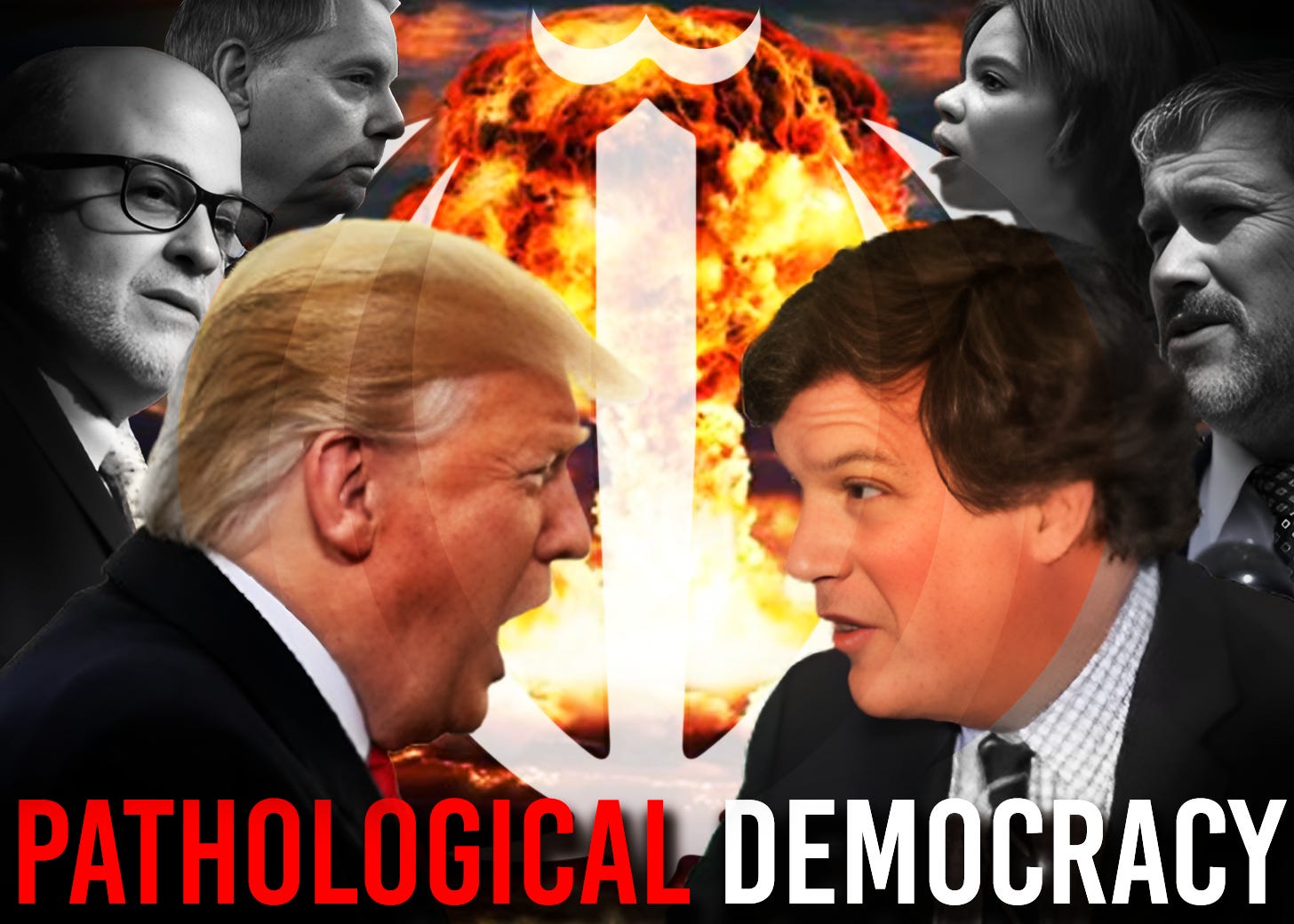
War, war never changes - but Trump’s war with Iran has caused a dramatic split in the coalition of Republicans, Libertarians, disaffected Democrats and Independents who once voted for him based on a seemingly simple shared goal: placing America and Americans first in all political considerations, both domestic and international. A civil war of sorts has also been declared simultaneous, with lines drawn between Trump and what some have termed “New MAGA”, including the likes of former Never Trumpers such as Mark Levin and Lindsey Graham versus “Old MAGA,” including long-time Trump supporters such as Alex Jones and Tucker Carlson, MAGA-adjacents such as Thomas Massie, and more fringe elements of the right, such as Nick Fuentes and Candace Owens.
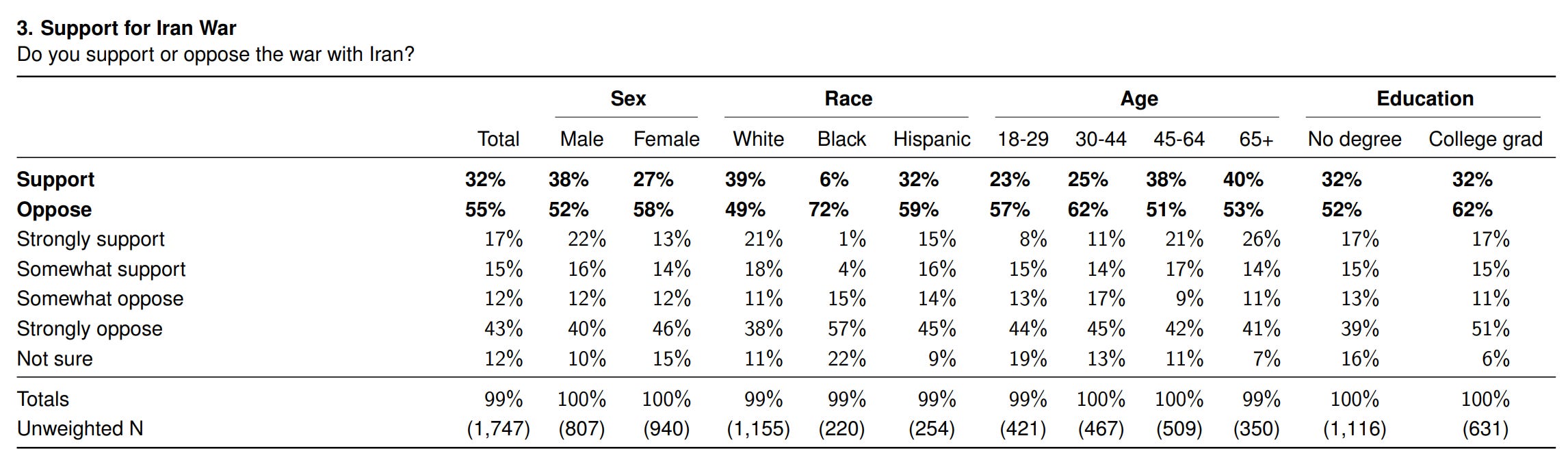
Those opposed to Trump’s war see it as a fundamental betrayal of his guarantees of, well, no new wars, a promise for which he recently and repeatedly demanded a Nobel Peace Prize. Meanwhile, key domestic promises that bound this broad coalition - reducing H1B immigration, mass deportations of immigrants, “draining the swamp,” Epstein transparency, and lowering the cost of living and homeownership - have all been abandoned or broken, seemingly in favour of a foreign war no one asked for and that very few appear pleased with in the polls, with only 32% of Americans in support as of April, 2026.
Yet while many feel betrayed, many also seem compelled to stand by Donald Trump and “stick with their vote.” This isn’t a phenomenon limited to this particular political habitat. It appears to be a feature of democracy rather than a bug. After all, one of the reasons so many supported Trump was a shared belief that finding a politician who actually lives up to their promises is like finding a needle in a haystack and Trump was that golden spindle.
To be clear, the “sticking with your vote” phenomenon is also in no way limited to the right. Just thinking back to recent memory in U.S. politics - for which Biden gaffe was there not an endless stream of rationalisations and justifications from Democrat pundits and voters alike? But why, then, are some people so unwilling to even voice dissent when the person they voted for fails to meet expectations?
The answer, as usual, lies in human behavioural psychology and specifically in cognitive dissonance: a state of psychological discomfort that arises when our past actions or beliefs conflict with our present ones. Either we were wrong then, or we’re wrong now, and that tension must be resolved by changing either behaviours or attitudes to alleviate the “psychic pain” (to steal a phrase from the authors of Anti-Politics) dissonance creates.

Cognitive dissonance in the political context does not just occur when a politician fails to live up to expectations, as we will discuss later. Almost every aspect of the democratic process is potentially dissonance-inducing.
Most people vote for a candidate whom they not only believe is a good choice for achieving the change they want to see, but also someone that they believe can actually win. Hence the perpetual fear of “splitting” or “wasting the vote” by backing an unwinnable candidate. But when our preferred candidate wins, that victory itself serves as proof of their competence and legitimacy. When our preferred candidate loses, that loss, in turn, is often taken as proof of incompetence.
And yet, we voted for them. The vast majority of people wouldn’t intentionally vote for someone they believed to be incompetent or unfit, right? These duelling actions and beliefs - that we chose the best candidate, and yet that candidate lost - produce dissonance.
To manage this discomfort, we may shift our attitudes; evaluating the loser more negatively and the winner more positively. In elections, this has been described as “outcome-based” dissonance, where the result determines whether a voter experiences that psychological pain.
This dynamic is not hypothetical; it has been observed empirically across contexts.
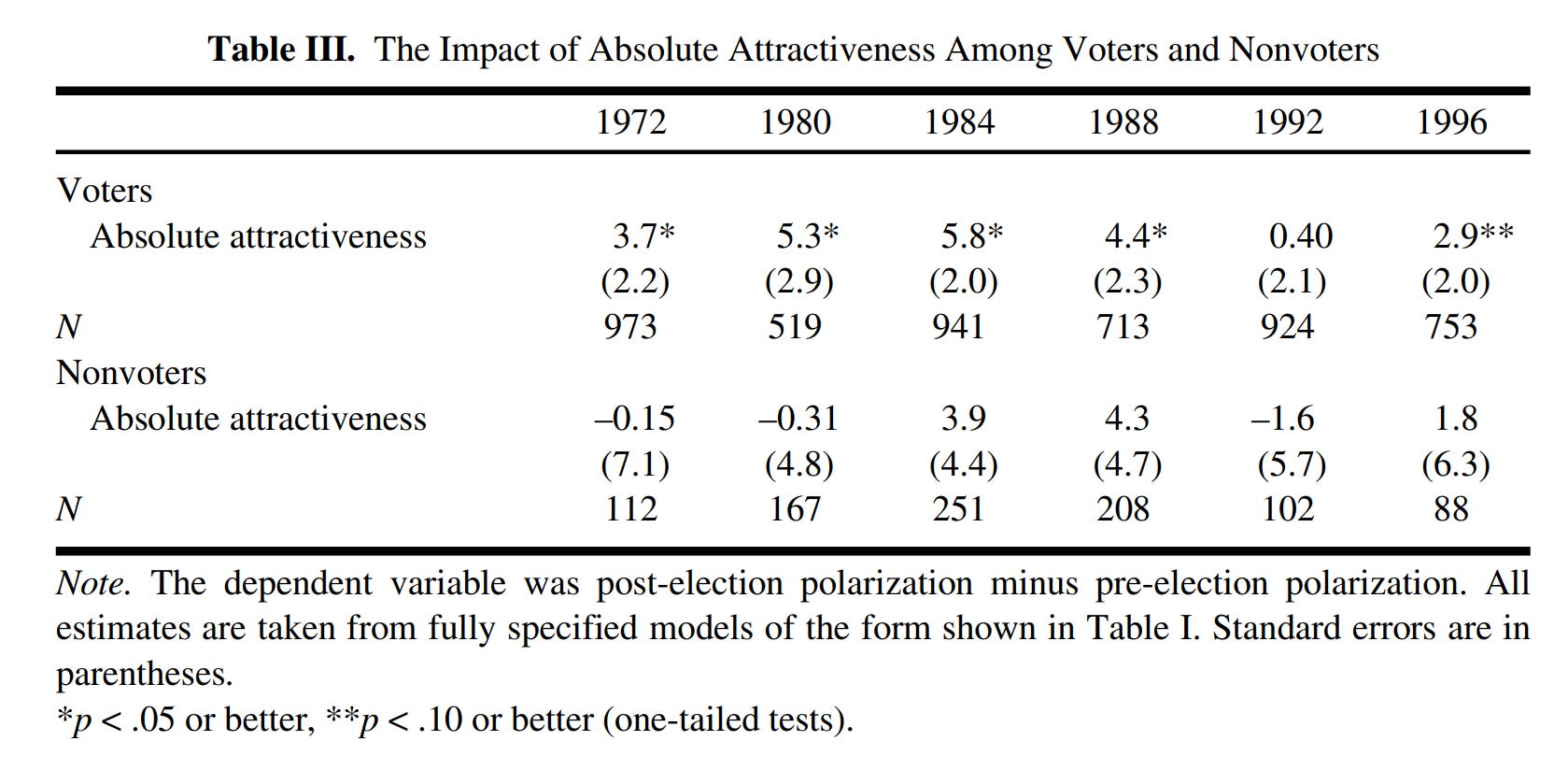
Beasley and Joslyn (2001) analysed data from the National Election Survey collected both before and after elections in 1972, 1980, 1984, 1988, 1992, and 1996 to examine whether winning or losing an election alters voters’ opinions of candidates. They measured this using changes in “attitude distance” between candidates, operationalized through a feeling thermometer.
For example, if a voter rated Bill Clinton at 75 and Bob Dole at 40 before the 1996 election, but after Clinton’s victory adjusted those ratings to 70 and 50 respectively, the evaluative distance between the two candidates would have narrowed.
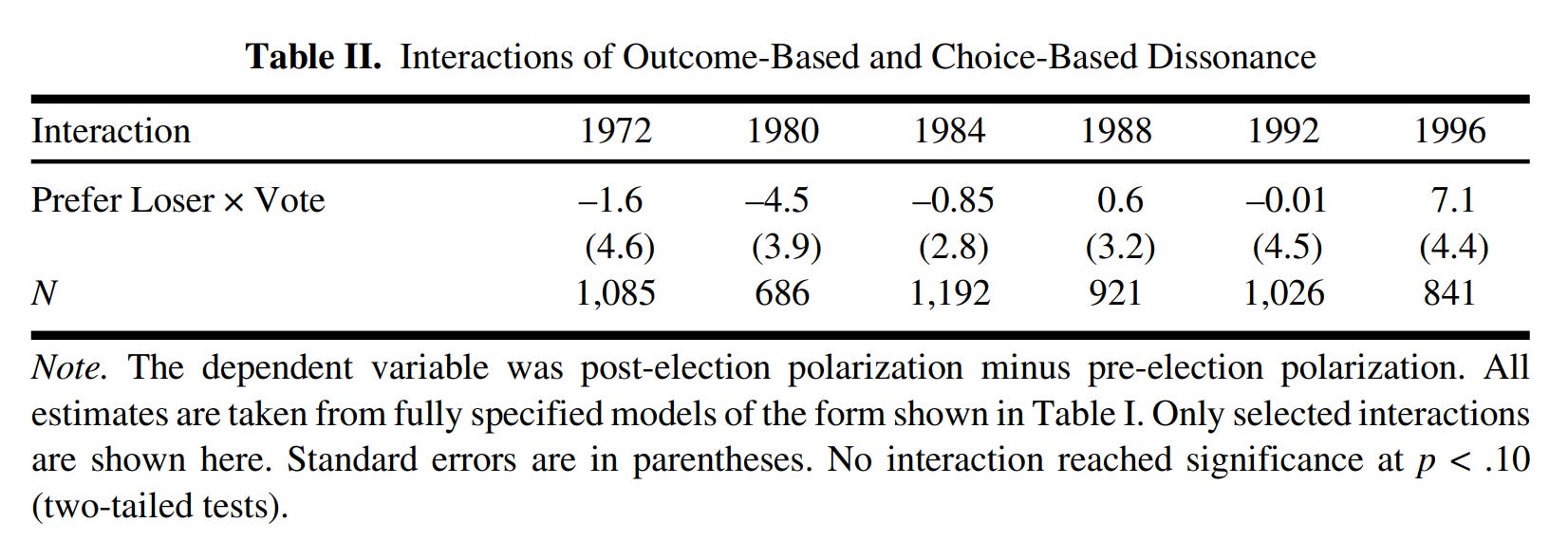
Across five of the six elections assessed, voters reported wider attitude distances between candidates in the post-election period relative to non-voters. The sole exception was the aforementioned 1996 election between Clinton and Dole, where no significant change in favourability distance was observed. This may be attributable to the relatively moderate positions both candidates held within their respective parties. Additionally, the 1996 election was unusual in that independent candidate Ross Perot captured a substantial share of the popular vote; around eight percent. Overall, the race was comparatively non-hostile, moderate, and widely perceived as low-stakes relative to both earlier and later elections. Whoever won, a moderate would occupy the White House, which may explain why 1996 stands as the lone case where post-election attitude distance did not increase.
With that exception aside and counterintuitively, it was actually voters for the losing candidate whose attitudes toward the winner improved the most. While supporters of the winning candidate did report slightly more positive attitudes toward their own candidate, the increase was minimal. Supporters of the winning candidate also expressed more positive attitudes toward the loser, while supporters of the losing candidate became significantly more negative toward their own preferred (now defeated) candidate.
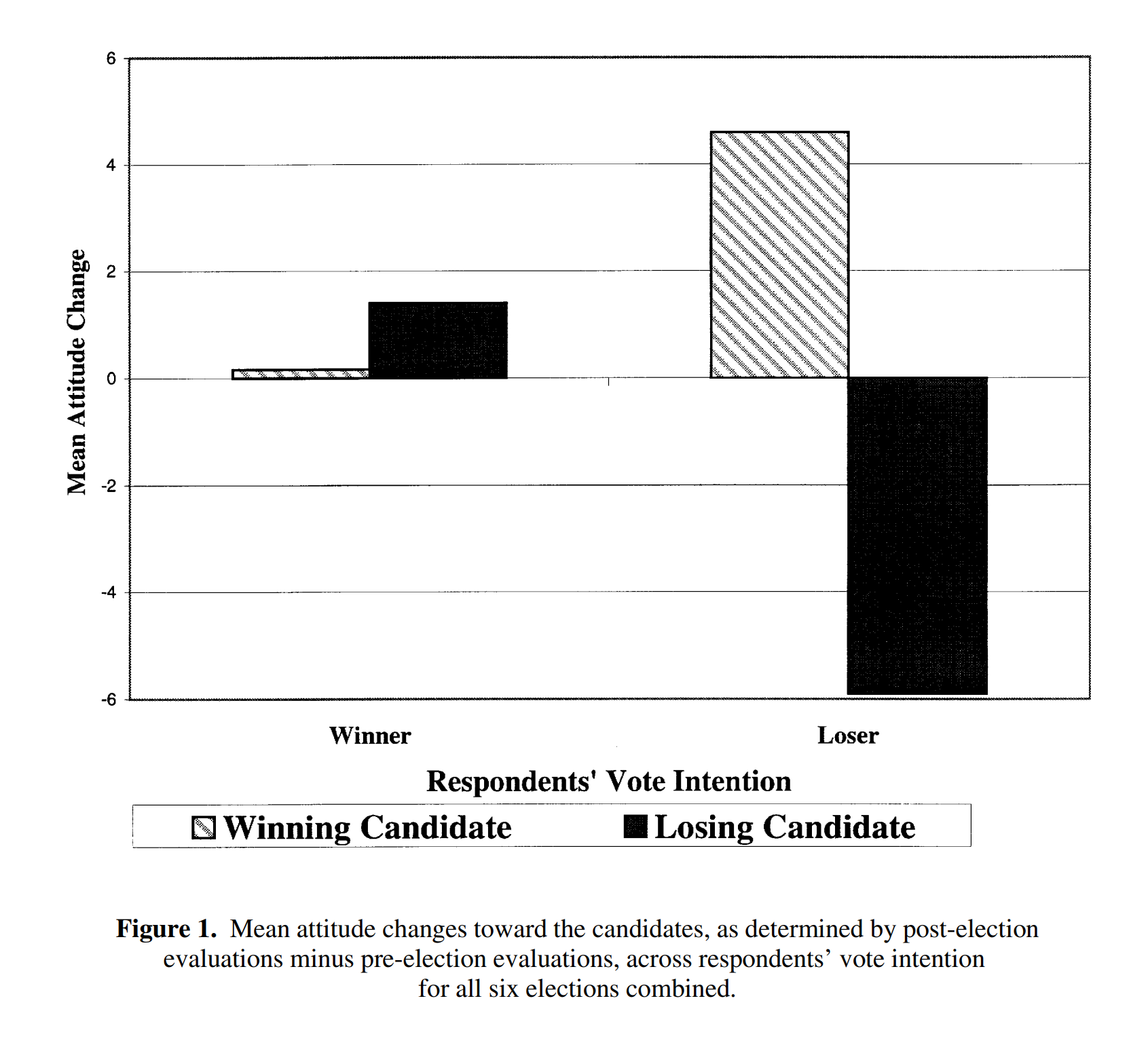
The political climate of the 1970s through the 1990s was, of course, very different from today’s social media-saturated, post-Trump environment. Still, the underlying logic is consistent. If my preferred candidate loses, it becomes psychologically convenient to conclude that he simply wasn’t very good and that I never really liked him all that much anyway. But if my candidate wins, then his victory becomes validation: proof that he was the better choice, and that I was right to support him because the public has collectively affirmed that judgment.
Because I backed the winner, I don’t have to grapple with the psychological cost of defeat. I’m free, instead, to soften my view of the loser and perhaps even to concede that he ran a good race, or to notice qualities I can now afford to appreciate from the victors’ podium precisely because the competition is ended and the outcome decided. Vox populi, vox Dei.
Obviously, things have changed in American politics since 2016, to put it mildly. While an exact replication of Beasley and Joslyn’s methodology has not been conducted, a 2023 analysis of affective polarisation by Reiljan and colleagues, drawing on data from 102 elections across 40 countries between 1996 and 2019, offers a useful point of comparison. Their findings suggest that there are only a handful of countries where leader-based affective polarisation exceeds party-based polarisation. The United States is one of just three.
Affective polarisation refers to the extent to which voters hold positive sentiments toward their own party while harbouring negative sentiments toward opposing parties. In most countries, this dynamic is primarily party-driven rather than leader-driven. The United States is a notable exception. While it is not alone in exhibiting relatively high levels of leader-focused polarisation (countries such as Serbia, Mexico, Portugal, Slovakia, Italy, the Czech Republic, Romania, Uruguay, South Africa, Hungary, Bulgaria, Montenegro, and Turkey also rank highly), it is one of only three countries, alongside Mexico and Peru, where leader-affective polarisation exceeds party-affective polarisation. In the remaining 37 countries studied, the reverse was true.
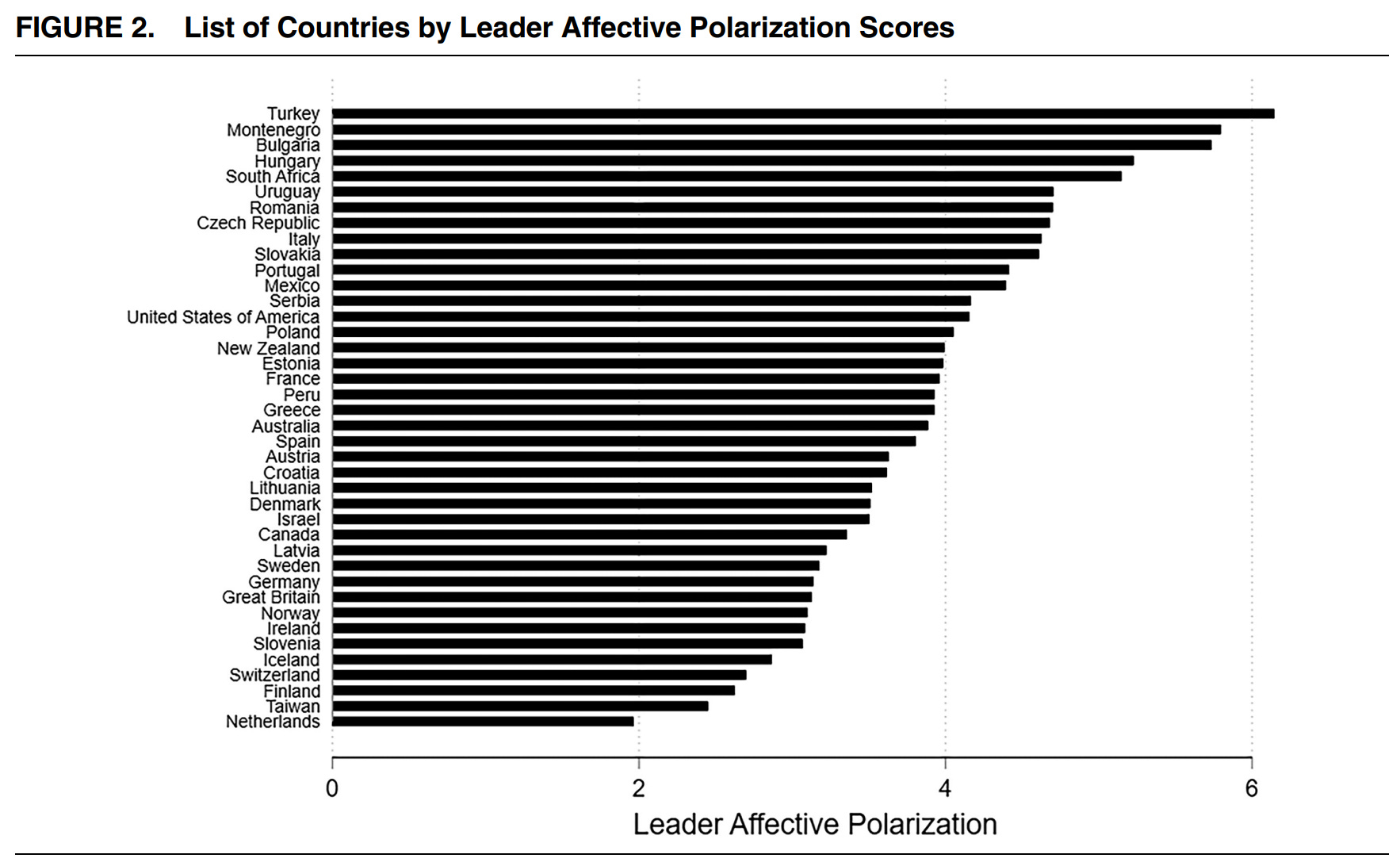
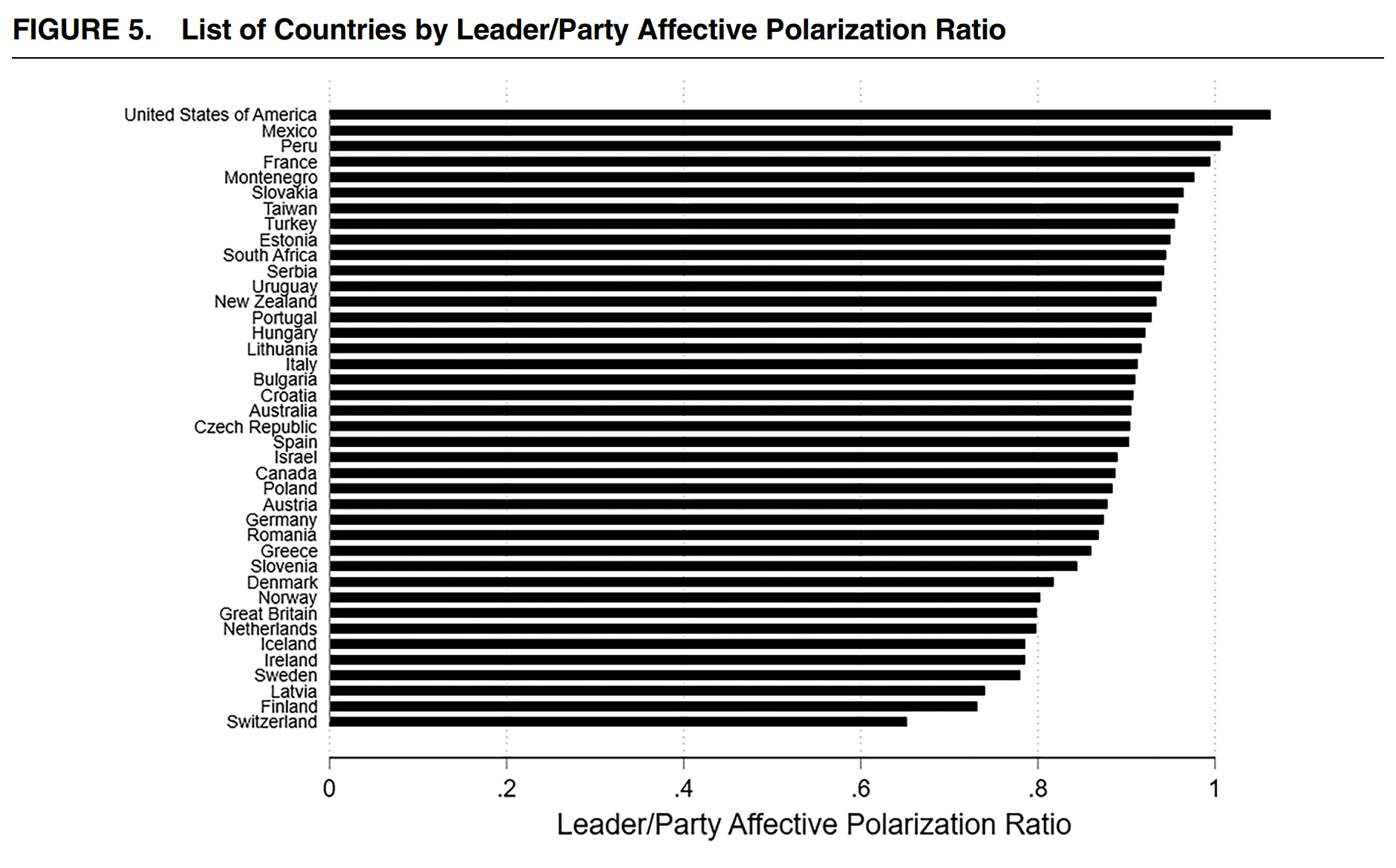
In other words, the United States is one of very few political systems where individual leaders appear to drive polarisation more than parties themselves, at least since 1996. Thus, we should not expect American voters today to exhibit the same post-election attitude shifts towards losers observed in earlier decades. When political identity becomes tethered to individuals rather than institutions, the psychological mechanisms that once allowed voters to soften toward losing candidates, or to distance themselves from their own losing choices, may no longer function in the same way.
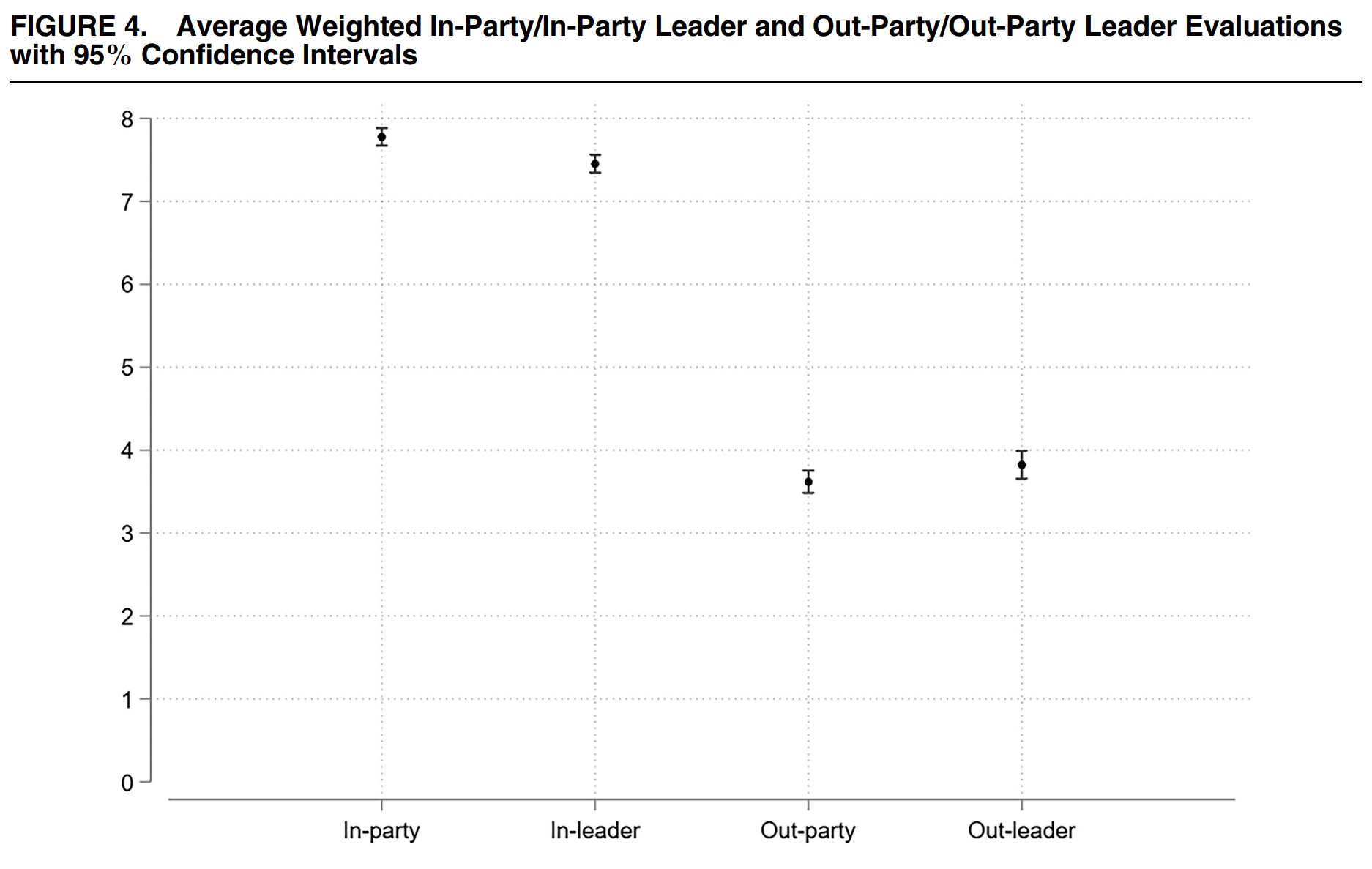
Across all nations examined, the strongest predictor of both party- and leader-affective polarisation was self-identified partisanship, with left–right ideological distance playing a much smaller role. Both forms of polarisation were also less pronounced in countries where citizens expressed low confidence in government. Additionally, a greater number of political parties was associated with lower levels of both forms of affective polarisation. The authors also found a weak but statistically significant effect of time, indicating that both leader- and party-based polarisation have increased in recent decades globally.
Of course, these are broad international trends, and the model accounts for less than 50 percent of the variance in leader- and party-affective polarisation. There is no single, uniform pattern, but individual political figures can tend to exert outsized influence. Specifically, leaders such as Donald Trump, Robert Fico, or Milo Đukanović demonstrate how strongly polarising personalities can reshape political landscapes. This also means that it is entirely possible that levels of polarisation within a nation may shift once such figures exit the political stage. When Trump leaves office, for example, the current feverish polarisation of the American public could potentially dissipate.
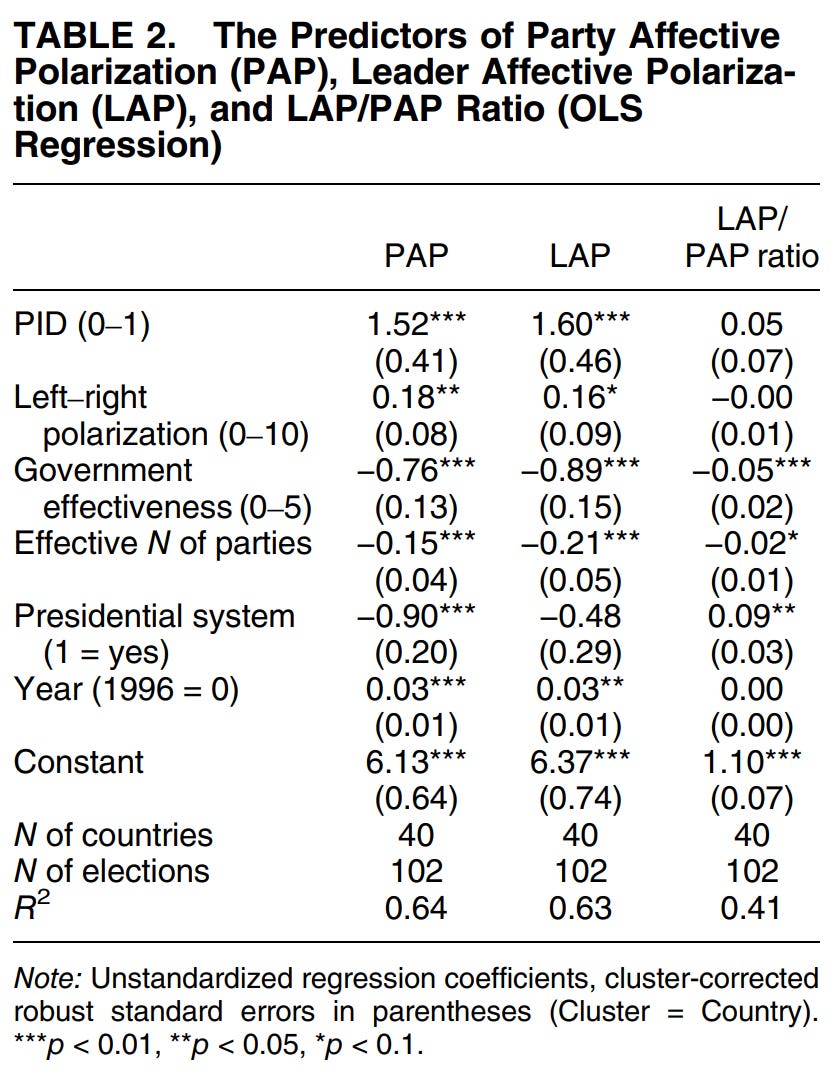
Although Reiljan et al.’s analysis cannot account for the effects of pre-existing dissatisfaction with electoral politics, it may help explain relatively low levels of collective polarisation in cases such as the 2015 UK general election, where dissatisfaction was directed more toward Labour leader Ed Miliband than toward the Labour Party itself. The next major test of this dynamic will likely come in the 2029 United Kingdom general election, where overtly polarising figures, including Nigel Farage, Zack Polanski, and Rupert Lowe are set to compete.
If polarisation explains how people feel about politics, partisanship explains why those feelings tend to foment into patterns of behaviour.
Once someone becomes a partisan, they tend to remain one, if only to avoid the psychological discomfort of cognitive dissonance. Over time, their attitudes toward parties or leaders may shift in intensity, but the underlying alignment is remarkably stable. The question, then, is not just why people stay partisan, but how that process begins in the first place.
Often, it begins with the most basic component of the democratic process: the act of voting.
